Skip to content
TMZON Logo
  • Intellectual Property
  • Business Compliance
  • Documentation
  • Insights & Updates
  • Toggle website search
Search this website
Read more about the article DPIIT Trademark Fee Rebate: How the 50% Discount Works
Startup Legal Basics / All / Trademark Registration

DPIIT Trademark Fee Rebate: How the 50% Discount Works

Most guides to DPIIT recognition list the trademark fee rebate as one line in a long benefits menu, somewhere between the tax holiday and the GeM procurement access. That's fine for a general overview, but it leaves out the mechanics that actually matter once you're the one filing: which fee…

0 Comments
July 29, 2026
Read more about the article Why Startups Get Forced to Rebrand: India Case Study
Startup Legal Basics / All / Trademark Registration

Why Startups Get Forced to Rebrand: India Case Study

In February 2026, a Bengaluru-based technology company called Anthropic Technologies Pvt Ltd — incorporated in Karnataka back in 2013 — filed suit in Karnataka against the US artificial intelligence company Anthropic PBC, arguing that its decade-old use of the name in India gives it rights the American company's global fame…

0 Comments
July 27, 2026
Read more about the article Trademark Registration for Influencers in India (2026)
Trademark Registration / All / Startup Legal Basics

Trademark Registration for Influencers in India (2026)

If you're a content creator, freelancer, or influencer in India, 2026 has quietly changed your legal status. On April 14, 2026, the Rajya Sabha passed the National Creator Economy Bill, formally recognizing social media influencers, YouTubers, and digital artists as professionals — complete with a Creator Welfare Fund for insurance…

0 Comments
July 22, 2026
Read more about the article SIPP Scheme 2026 — Complete Guide to Free Patent & Trademark Filing for Startups in India
Startup Legal Basics / Intellectual Property

SIPP Scheme 2026 — Complete Guide to Free Patent & Trademark Filing for Startups in India

The SIPP scheme is the most valuable benefit in India's startup ecosystem that almost no founder uses. Under the Startup Intellectual Property Protection (SIPP) scheme — run by DPIIT and the Controller General of Patents, Designs and Trade Marks — a recognised startup pays zero in professional fees to file…

0 Comments
May 9, 2026
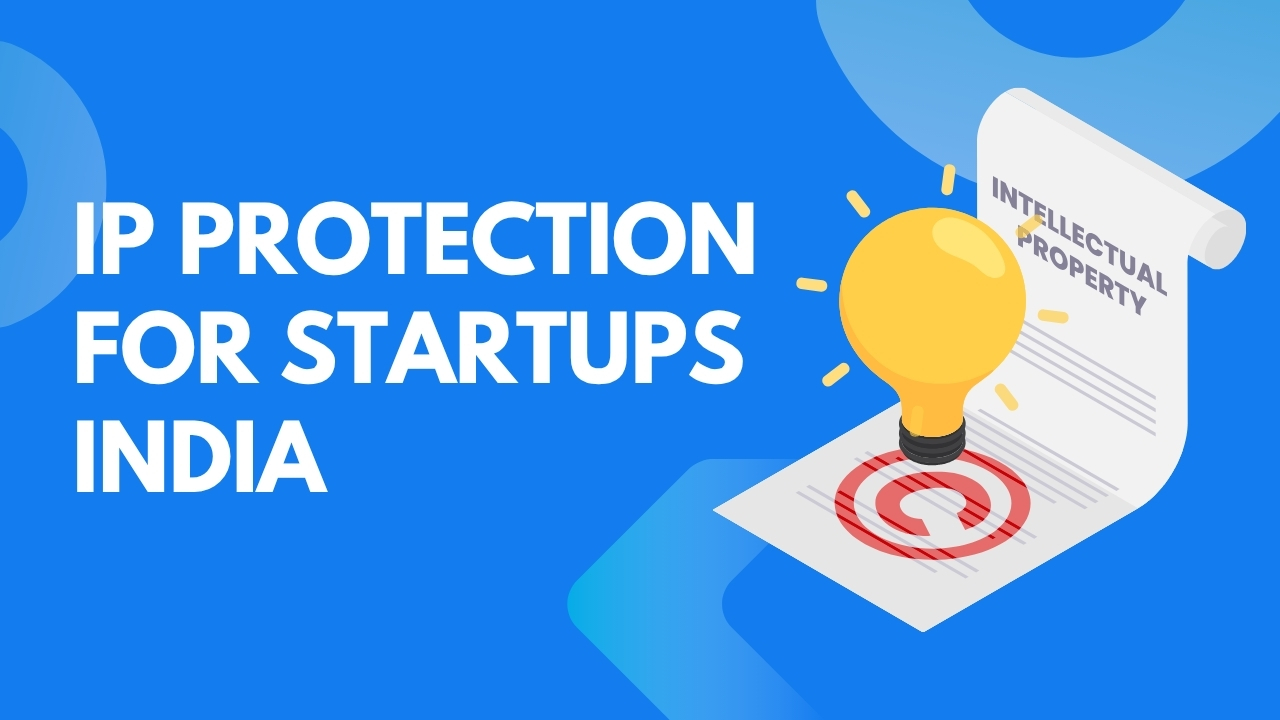
Read more about the article IP Protection for Startups India — Complete Guide (2026)
Startup Legal Basics / Intellectual Property

IP Protection for Startups India — Complete Guide (2026)

Indian startups protect their IP through four core instruments: trademark registration (for brand names, logos, and slogans under the Trade Marks Act, 1999), patents (for technical inventions under the Patents Act, 1970), copyright (automatic for creative works under the Copyright Act, 1957), and trade secrets (through NDAs and access controls).…

0 Comments
May 8, 2026
Read more about the article Section 80-IAC Tax Benefits for Startups India (2026)
Insights & Updates / Startup Legal Basics

Section 80-IAC Tax Benefits for Startups India (2026)

Section 80-IAC of the Income Tax Act, 1961 allows eligible Indian startups to claim a 100% deduction of profits and gains from an eligible business for any 3 consecutive financial years within their first 10 years of incorporation. The startup must be a DPIIT-recognised Private Limited Company or LLP incorporated…

0 Comments
May 7, 2026
Read more about the article ESOP Policy for Startups India — Complete Guide (2026)
Startup Legal Basics

ESOP Policy for Startups India — Complete Guide (2026)

An ESOP (Employee Stock Option Plan) policy is a formally documented scheme under which a startup grants eligible employees the right — but not the obligation — to purchase company shares at a pre-determined price (exercise price) after completing a vesting period. In India, ESOPs for private limited companies are…

0 Comments
May 6, 2026
Read more about the article FSSAI Compliance for Small Business India — Guide (2026)
Legal Compliance / Startup Legal Basics

FSSAI Compliance for Small Business India — Guide (2026)

Every food business operator (FBO) in India must obtain FSSAI registration or a licence under the Food Safety and Standards Act, 2006 before commencing operations. From 1 April 2026, small food businesses with annual turnover up to ₹1.5 crore need only Basic Registration (previously the limit was ₹12 lakh). Licences…

0 Comments
May 5, 2026
Read more about the article Company Incorporation Compliances India — Guide (2026)
Business Compliance / Startup Legal Basics

Company Incorporation Compliances India — Guide (2026)

After receiving the Certificate of Incorporation (COI) from the MCA, a company must complete several mandatory steps — the most critical being: hold the first Board Meeting within 30 days, appoint the first auditor within 30 days, open a bank account, file Form INC-20A (commencement of business certificate) within 180…

0 Comments
May 2, 2026
Read more about the article Director KYC Compliance India — DIR-3 KYC (2026)
Business Compliance / Startup Legal Basics

Director KYC Compliance India — DIR-3 KYC (2026)

Director KYC (DIR-3 KYC) is a mandatory KYC compliance filing for every person holding a Director Identification Number (DIN) in India, filed with the Ministry of Corporate Affairs (MCA) under Rule 12A of the Companies (Appointment and Qualification of Directors) Rules, 2014. From 31 March 2026, the filing frequency changed…

0 Comments
May 1, 2026
Older Posts →

  • All
  • Blog
  • Business Compliance
  • Business Setup
  • Company Registration
  • Copyright Registration
  • Documentation
  • Insights & Updates
  • Intellectual Property
  • Legal Compliance
  • Patent Registration
  • Startup Legal Basics
  • Trademark Registration

Recent Posts

  • Trademark Renewal Deadlines: What Happens If You Miss Yours
    Trademark Renewal Deadlines: What Happens If You Miss Yours
    August 12, 2026/
    0 Comments
  • DPIIT Trademark Fee Rebate: How the 50% Discount Works
    DPIIT Trademark Fee Rebate: How the 50% Discount Works
    July 29, 2026/
    0 Comments
  • Why Startups Get Forced to Rebrand: India Case Study
    Why Startups Get Forced to Rebrand: India Case Study
    July 27, 2026/
    0 Comments

Follow Us

  • Opens in a new tab
  • Opens in a new tab
  • Opens in a new tab
  • Opens in a new tab

Quick Links

  • Intellectual Property
  • Business Compliance
  • Documentation
  • Insights & Updates

Resources

  • About Us
  • Media
  • Stories/Testimonials
  • Contact Us

Support

  • Consultation
  • Legal Guides
  • FAQs
  • Careers

Follow Us

  • Opens in a new tab
  • Opens in a new tab
  • Opens in a new tab
2026 © TMZON. All rights reserved.
  • Intellectual Property
  • Business Compliance
  • Documentation
  • Insights & Updates
  • Toggle website search